


Finishing is where sheet metal polishing becomes aesthetic. Deburring has functionality (safe edges/fit); finishing is evaluated on appearance across the entire surface under operational lighting.
Buyers expect identical appearance batch-to-batch:
- uniform roughness
- consistent gloss level
- predictable grain direction
- no or very few visible defects.
Finishing usually comes after the hot/cold rolling and before cutting, coating, assembly, or forming steps, so any flaws are “locked in” at that point.
The 3 finish families you must separate to avoid wrong expectations
Satin finishes aim for a sophisticated matte look. The grain is directional, short and well visible, the finish should evenly diffuse light with minimal “hot spots” and glare while maintaining a clean, refined surface.
Brushed finishes are directional by design: the grain is fine and elongated, built into the finish to provider a “soft” appearance. They’re popular on stainless kitchens, appliances and interior panels because the texture feels upscale and hides light handling. Once installed, if every part follows the same grain rules, it looks fantastic.
Mirror/SuperMirror finishing is another thing entirely: maximising reflectivity and uniformity is the goal. IMEAS’ SuperMirror polishers use a vertical-spindle design, producing ultra-low roughness (Ra = 0.001 μm) with 600° gloss or more.
Sheet vs Coil: the production reality that changes everything
Sheet-to-sheet vs. coil-to-coil. That’s the big decision with finishing lines.
The sheet streamlines flexibility, inspection, and rework, so a defective sheet doesn’t foul the entire batch. Coil offers greater throughput and consistency if tension, tracking, and speed are controlled.
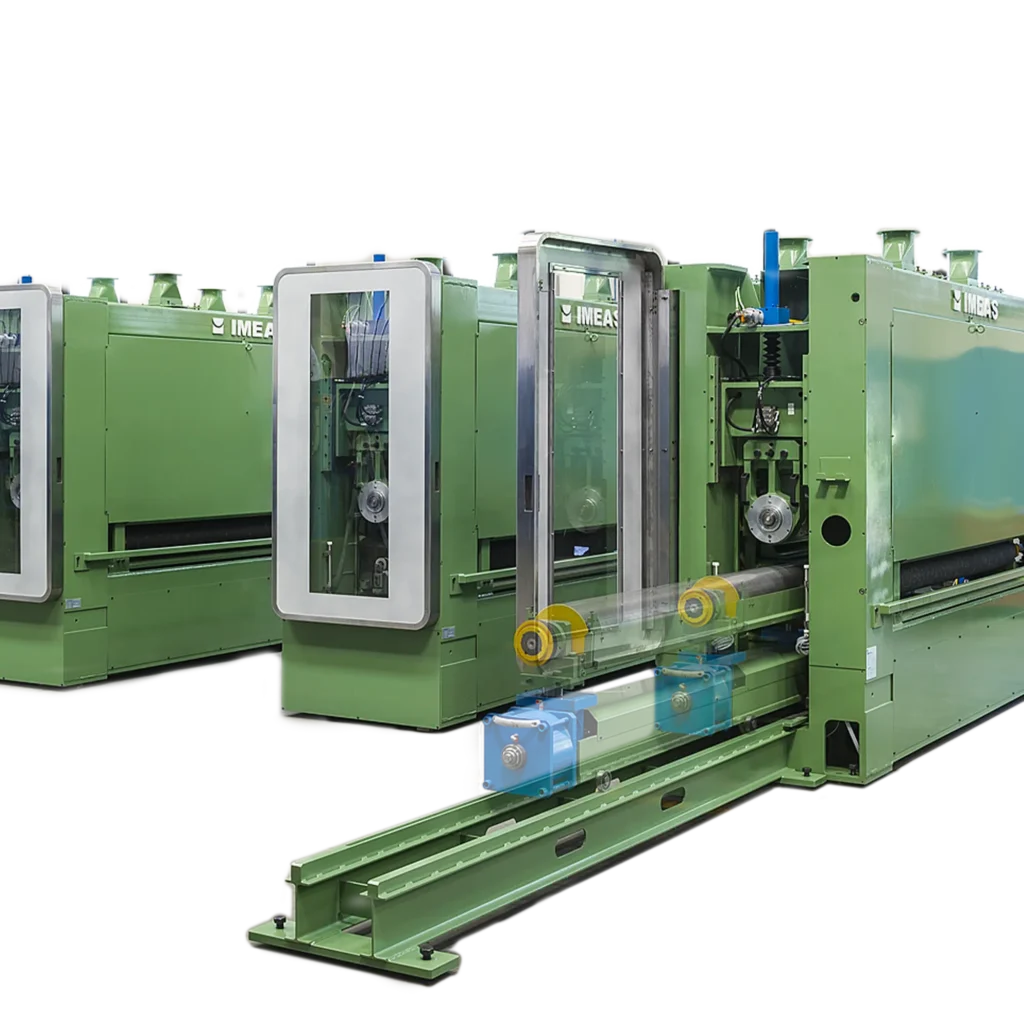
One example of a coil-to-coil solution is an IMEAS polishing line equipped with decoiler and recoiler equipment,multiple grinding and brushing heads, a de-dusting system, and a film coating station. In this setup, those features help reduce dust buildup and limit surface contamination during processing and damages thereafter.
The finishing line anatomy
Think in units and sequence. A line is a chain of stations that condition the surface, build the texture, clean and protect it from re-contamination.
- Grinding: removes surface defects (rolling marks, skin, indents) and produces a high to medium roughness profile with short scratches (<1inch).
- Brushing: used alone on high quality material produces a fine roughness profile with long scratches (2-5 inch) and controlled cross waves pattern; in combination with grinding produces a “Duplo” surface with medium roughness and average scratch length .
- Hairline: a kind of grinding with medium to high roughness and very long scratches (>5 inch)
- Mirror/SuperMirror: from progressive grinding to polishing steps, then to strict cleaning between stages, and final inspection under defined lighting.
IMEAS’ AX grinding and brushing machines reflect this line design approach in the company’s latest product materials. The AX series includes features aimed atgreater flexibility and control. Specifications include a maximum installed power of 110 kW, a workable thickness up to 15 mm, and touchscreen recipe management. The range also includes a monolithic modular concept, quick “billy-roll” replacement , and computerized tool positioning.
Quality metrics that matter (and how to spec them)
Write specs that can be met by production and that reflect how customers accept parts.
Start with roughness (Ra/Rz) targets, but don’t stop there. Two parts could have the same Ra value yet be perceived differently if the lay pattern changes or the gloss becomes inconsistent. When specifying mirror finishes, gloss/reflectivity targets are just as crucial as roughness.
Next, specify visual criteria: lighting type, viewing distance, and orientation rules, such as consistent grain direction.
Finally, agree where inspection will occur in the line (100% vs sampling) so “good” is defined the same way for everyone.
Defect Library: symptom, likely cause and practical Fix
In aesthetics, defects aren’t subtle: they stand out when illuminated. They will continue to reproduce if the cause remains in the stream. Reference this library to correlate what you observe with the variable to adjust.
Brushing Defects
- Banding (“tiger stripes”) often means fluctuating contact pressure, uneven brush wear, inconsistent density and/or abrasive distribution on the brush or wandering feed.
- Direction shifts often mean handling mistakes: improper alignment, sudden direction change or sliding off the reference edge.
- Gloss variation usually means contamination or mixed consumable life, so cleaning frequency and change intervals are essential.
Grinding Defects
- Chatter-marks, out of balance rotating parts, unrefined or worn out contact rollers, poor quality abrasive belts.
- Micro-scratches usually indicate trapped particles or missing abrasive grains..
- Tint is caused by excessive friction (too much pressure) or inadequate cooling, leading to compound loading and heat.
Mirror/SuperMirror Defects
- Directional etching indicates misalignment or stereotypical motion.
- Worn consumables or drifted settings may cause clouding or inconsistent reflectivity. “Ghosting” of a previous grind pattern; rebuild the progression and avoid grit carryover, then re-inspect at the established inspection light.
“Recipes” for metal finishing
Recipes are defined sets of parameters, such as abrasive order, speeds, pressures, oscillation motions, brush/pad selection, and clean intervals. They’re also defining who can adjust which parameters and what gets recorded. Aesthetic variation occurs when small amounts of drift cause banding, haze, or a mismatch in gloss on panels next to each other.
Recipe controls matter for that reason. AX machines from IMEAS’ metal working lines self-describe themselves with software that enables recipe management and CNC tool placement. It lets teams reproduce “the good setup” between shifts and changeovers.
Applications: where aesthetic finishing is a business requirement
Applications such as stainless steel kitchen backsplash panels, hovens, refrigerators and architectural interior finishes benefit from matching aesthetics. Grain direction, gloss, and roughness should match between panels, or seams shouldn’t show under office lighting.
With architectural and decorative metal applications, it’s clear that discrepancies are more apparent as expansive façades highlight any small irregularities. A pattern acceptable on one sheet may become distracting across an entire elevation. Industrial enclosures and consumer-facing metal finishes also rely on high-quality surfaces to convey a high-quality build. Scratches, haze, or inconsistent grain can cheapen an otherwise high-end product.
Checklist: Choosing the Right Finishing Solution
- Material: stainless or aluminium; thickness range; sensitivity to heat and contamination.
- Format: sheet or coil, based on throughput goals, tension/handling capability, and inspection needs.
- Target finish: brushed, grinded, or mirror; define roughness, gloss, and visual acceptance rules.
- Throughput & changeovers: number of recipes, frequency, and who owns governance.
- Allowable defect rate: what gets reworked vs scrapped, and where defects will be detected.
- Line logic + validation: map unit sequence and cleaning steps; run trials and approve samples under agreed lighting before locking the spec.
If the spec and inspection aren’t aligned, even excellent polishing will be rejected.
Choosing the right finishing solution starts with aligning the material, format, target finish, and validation process with your production goals. To explore brushing, polishing, and SuperMirror solutions in more detail, review IMEAS’ metal-finishing range and identify the configuration that best suits your application.